The conversation has begun. We invite you to continue it.
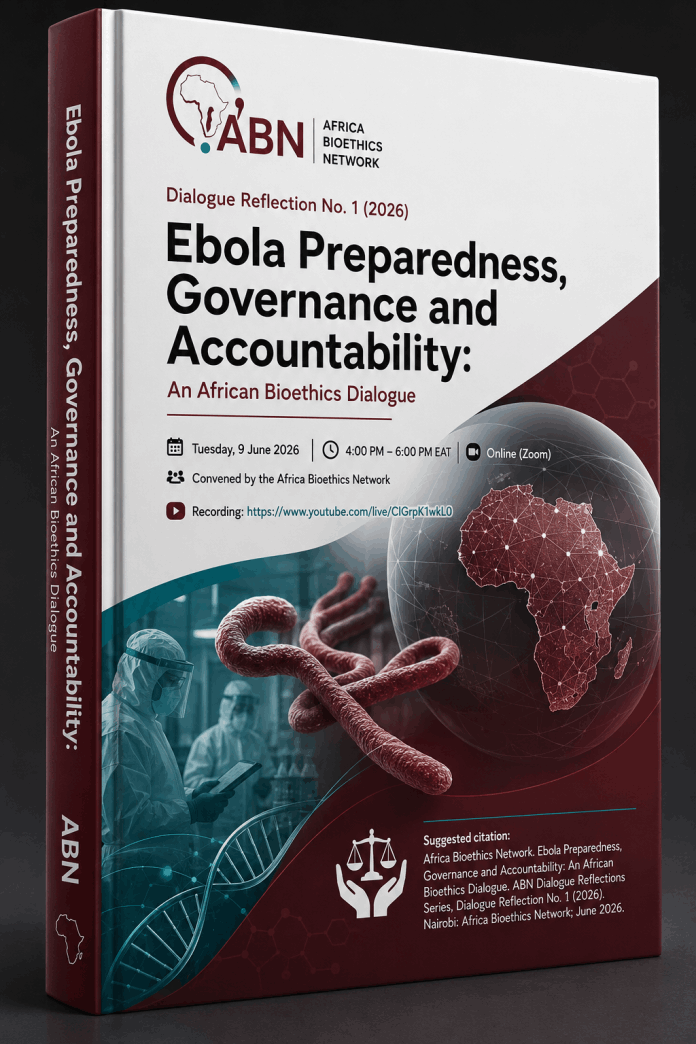
Download the full ABN Reflection Report to explore the dialogue's key insights, ethical reflections, and considerations for the future of outbreak preparedness in Africa.
Beyond Ebola: The Ethical Questions That Will Define Africa's Preparedness for the Next Outbreak
When an outbreak threatens lives, the immediate focus is often on vaccines, laboratories, surveillance systems, and emergency response. But long before the first case is detected—and long after the headlines disappear—another set of questions quietly determines whether preparedness will succeed.
Who decides? Who is heard? Who is protected? And who is held accountable?
These are not simply policy questions. They are ethical ones.
Against a backdrop of renewed conversations on Ebola preparedness, public trust, governance, and high-containment public health infrastructure across Africa, the Africa Bioethics Network (ABN) convened a Rapid Ethics Dialogue to examine the values that must guide preparedness before the next emergency arrives.
The conversation brought together experts, practitioners, researchers, and participants from across Africa and beyond to reflect on issues that rarely receive the same attention as scientific preparedness. Discussions explored the ethics of governance and accountability, meaningful community engagement, sovereignty, solidarity, transparency, public trust, data governance, and the fair distribution of risks and benefits.
One message emerged with remarkable clarity:
Preparedness is not only a technical challenge—it is an ethical one.
Scientific excellence alone cannot guarantee effective outbreak response. Communities must trust the institutions asking them to cooperate. Decisions must be transparent. Public engagement must be genuine rather than symbolic. Human dignity must remain central, particularly for vulnerable populations, even during times of crisis.
The dialogue did not seek consensus, nor did it advocate for or against any particular policy or institution. Instead, it created a space for thoughtful reflection on the ethical questions that should shape Africa's preparedness agenda for years to come.
These discussions have been distilled into the ABN Reflection Report, which synthesises the dialogue's major themes, emerging ethical tensions, and questions requiring continued attention. The report is intended to support policymakers, public health leaders, researchers, ethics committees, civil society organisations, and communities committed to strengthening preparedness that is not only scientifically robust, but also ethically grounded and publicly trusted.
As Africa continues to build stronger systems for responding to emerging infectious diseases, one question remains:
Will we prepare only our laboratories and emergency plans—or will we also prepare the trust, governance, accountability, and ethical leadership that make those systems work?
Download the full ABN Reflection Report to explore the dialogue's key insights, ethical reflections, and considerations for the future of outbreak preparedness in Africa.
