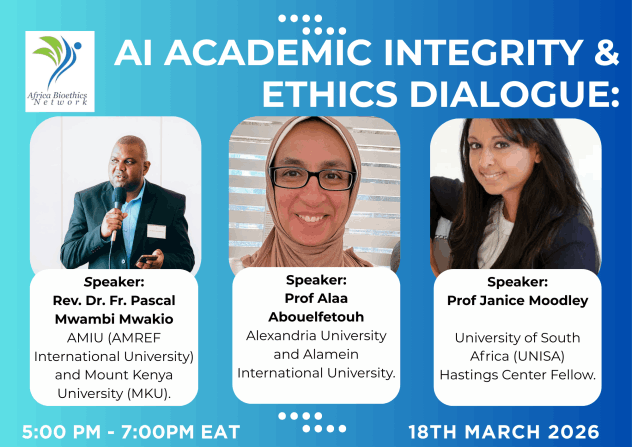
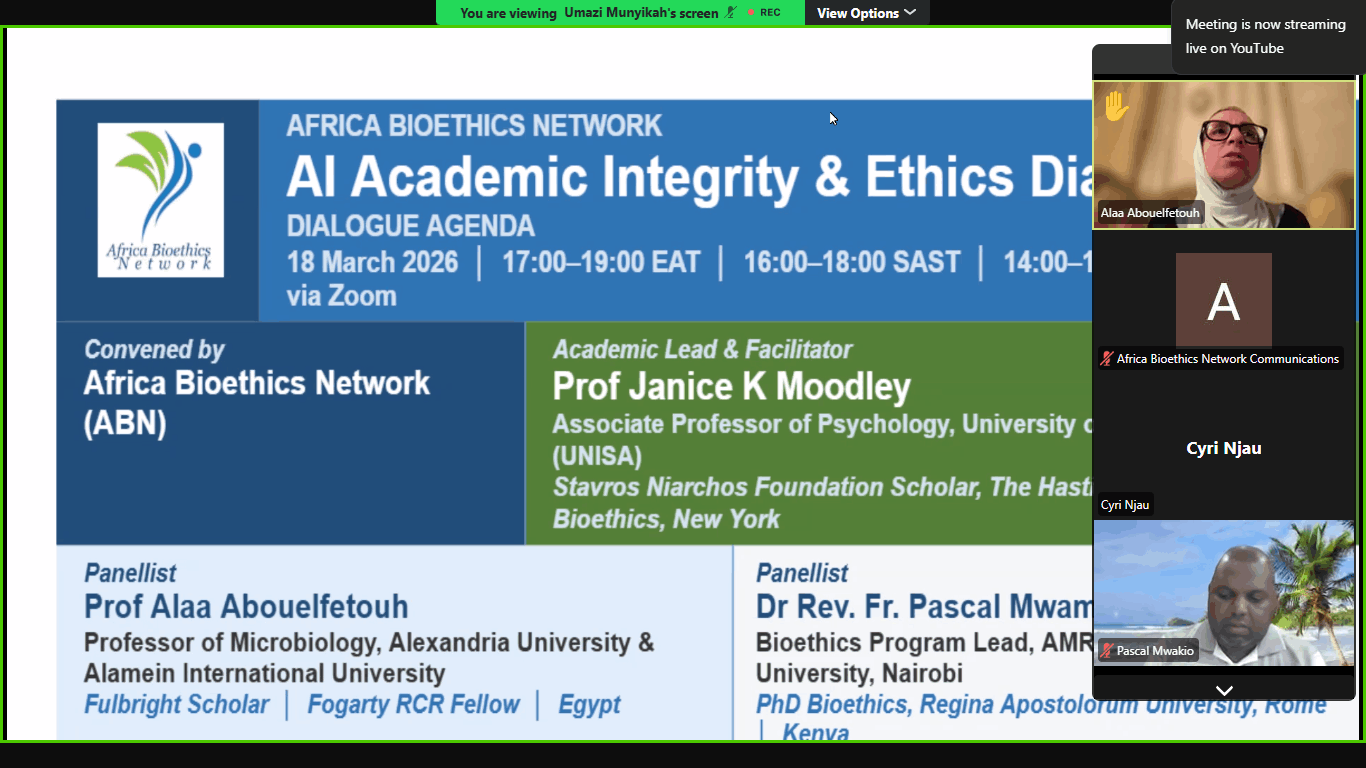
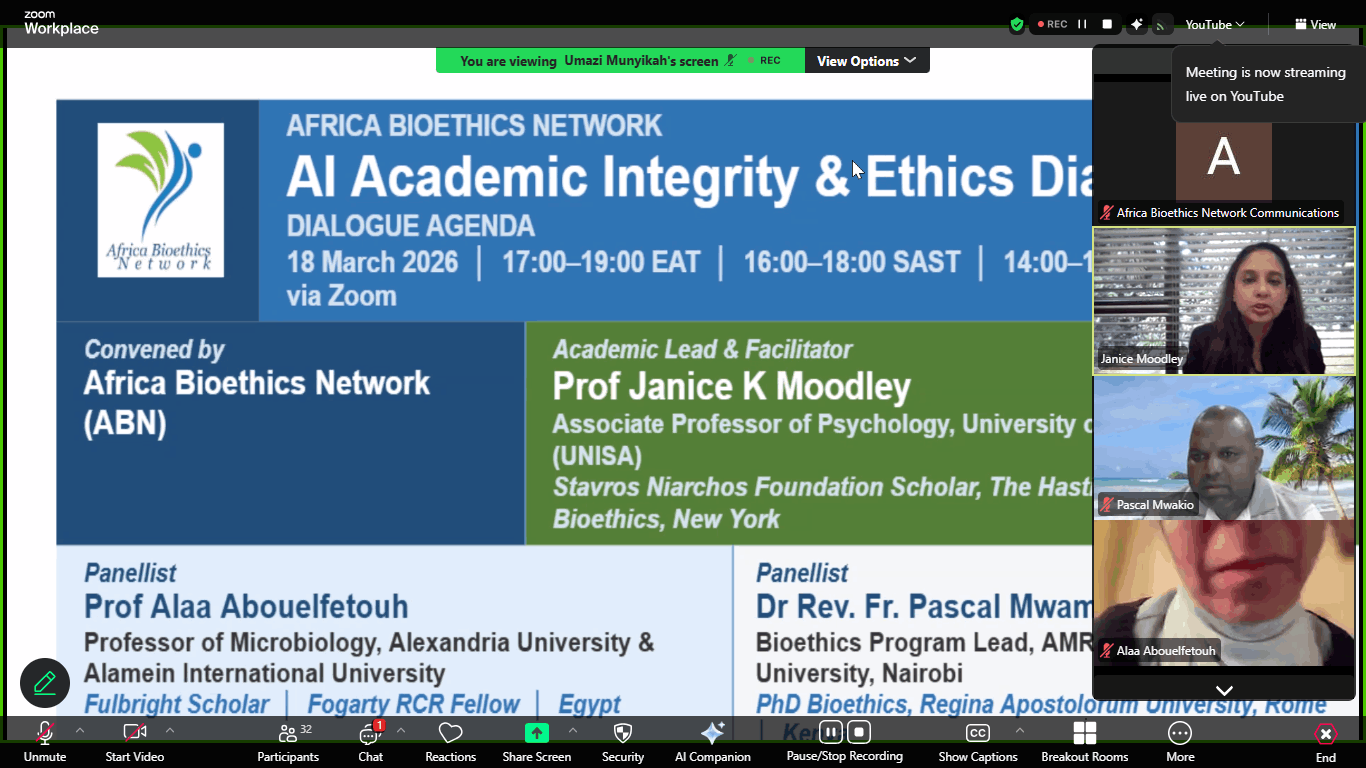
Rev. Dr. Fr. Pascal Mwambi Mwakio
Dr. Pascal Mwambi Mwakio reflected on the realities of teaching within online and distance learning environments, where AI use among students has become increasingly difficult to monitor and regulate. Drawing from his experiences at AMREF International University, he highlighted the tension between embracing AI as a useful educational tool while safeguarding critical thinking and authentic learning. He emphasized that AI is no longer a future concern, but a present reality requiring institutions to rethink assessment models, mentorship practices, and ethical frameworks. Dr. Mwakio also underscored the importance of African-led AI governance and data representation, noting that AI systems often reflect biases and lack sufficient African contextual knowledge.
He further stressed that AI should complement — not replace — human intelligence and critical reasoning.
“The question is not how to separate students from AI, but how to use it responsibly.”
“We need frameworks that speak to our African institutions and realities.”
Prof Alaa Abouelfetouh
Prof Alaa Abouelfetouh presented findings from a student-led survey conducted at Alamein International University in Egypt, examining students’ dependence on AI tools and their attitudes toward AI use in academia. The study revealed widespread use of platforms such as ChatGPT, Gemini, and DeepSeek for studying, academic writing, exam preparation, and communication tasks. While many students acknowledged AI’s usefulness, the findings also highlighted concerns around overdependence, emotional reliance, and reduced independent thinking. Prof Abouelfetouh stressed the importance of involving students in the development of AI policies and institutional guidelines, noting that younger generations are often the primary users of these technologies. She also raised concerns around confidentiality and the risks associated with sharing sensitive institutional, research, or personal information with AI systems.
“AI is here to stay. We need to learn how to use it responsibly and coach our students in the responsible use of AI.”
“We don’t want AI to think instead of humans — we want it to help humans.”
Prof Janice Moodley
As moderator and contributor to the discussion, Prof Janice Moodley highlighted the rapid and often fragmented institutional responses to AI adoption across universities. She reflected on how many institutions initially reacted with uncertainty, with some banning AI outright while others embraced it without sufficient ethical guidance. Prof Moodley emphasized that universities can no longer treat AI as an external threat but must instead focus on building responsible, ethical, and context-specific approaches to AI integration. She also pointed to the psychological and workload pressures AI places on academics, many of whom are navigating these technologies without adequate training or support. Importantly, she stressed that the challenge extends beyond technology itself to deeper questions about teaching, assessment, critical thinking, and student engagement in higher education.
“AI is here to stay, and we either adapt responsibly or risk becoming irrelevant within higher education.”
“How do we teach students to think critically when AI is increasingly doing the thinking for them?”
Key Takeaways from the Dialogue
1. AI Is Reshaping Higher Education Across Africa - Participants agreed that generative AI has fundamentally changed teaching, learning, assessment, and research practices. Universities can no longer ignore AI use among students or academics.
2. Academic Integrity Requires New Approaches - Traditional plagiarism detection tools and assessment methods are becoming less effective. Many participants advocated for redesigned assessments that prioritize critical thinking, verbal engagement, competency-based learning, and continuous evaluation.
3. African Contexts Require African Frameworks - A recurring theme throughout the dialogue was the need for AI ethics frameworks rooted in African realities, educational systems, and social contexts rather than relying solely on imported policies and standards.
4. Students Must Be Included in AI Policy Development - Speakers emphasized that students are among the primary users of AI tools and should therefore be active contributors to conversations about ethical AI use, institutional guidelines, and educational reform.
5. Ethical AI Use Extends Beyond Students - The dialogue highlighted that academics and researchers also use AI tools, often without clear institutional guidance. Responsible use, transparency, confidentiality, and ethical data practices must apply to faculty as well.
6. AI Literacy and Training Are Essential - Participants identified a growing need for structured AI literacy training for both students and staff, including education on AI biases, hallucinations, false references, privacy concerns, and ethical limitations.
Looking Ahead
The dialogue concluded with strong support for the formation of the ABN AI Ethics Working Group, which will continue discussions on AI, academic integrity, digital ethics, and higher education policy across Africa. Future initiatives will include collaborative policy development, research partnerships, educational resources, and ongoing continental dialogue aimed at ensuring AI is used responsibly, ethically, and inclusively within African higher education systems. As the conversation closed, participants reaffirmed a shared commitment to shaping AI governance from within African contexts and ensuring that technology strengthens — rather than weakens — authentic learning, critical thinking, and ethical scholarship across the continent.